Tampa's subtropical humidity and dense tree canopies in historic neighborhoods like Seminole Heights, Hyde Park, and Tampa Heights create elevated travel corridors for tree-dwelling rodents. Florida roof rats exploit…
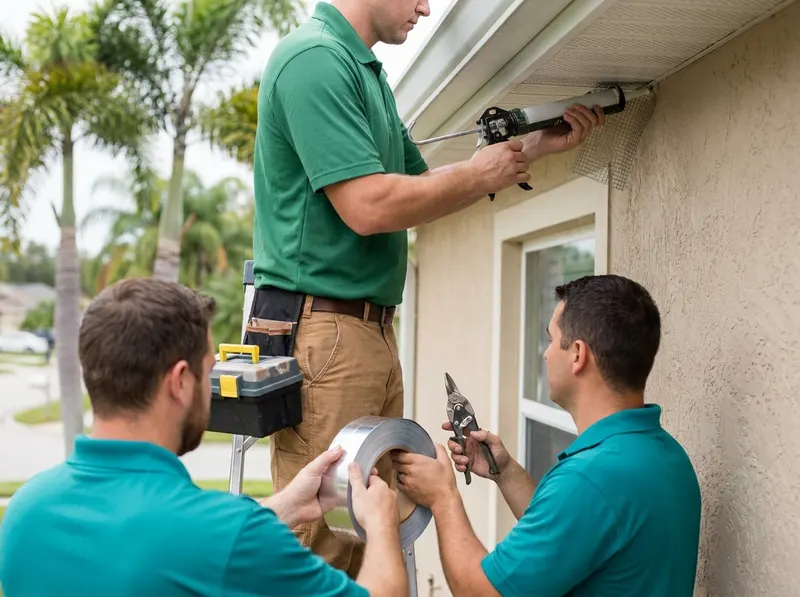
Tampa's subtropical humidity and dense tree canopies in historic neighborhoods like Seminole Heights, Hyde Park, and Tampa Heights create elevated travel corridors for tree-dwelling rodents. Florida roof rats exploit overhanging branches near live oaks and palms to access fascia boards, soffits, and roof intersections. While standard extermination uses temporary retail baits that leave animals to decompose inside drywall, structural rodent exclusion stops the entry cycle physically. Technicians inspect ridge vents, plumbing stacks, AC line chases, and foundation weep screeds. Sealing work utilizes 19-gauge galvanized steel hardware cloth and metal flashing that rodents cannot gnaw through, securing homes against re-entry without introducing dangerous poisons into living quarters.
Rodent pressure varies across Hillsborough County architecture. Waterfront homes along Davis Islands and Ballast Point often experience burrowing Norway rats navigating tidal riprap and crawlspaces, whereas tile-roof constructions in Westchase, Carrollwood, New Tampa, and Palma Ceia frequently face roof rat nesting beneath Spanish barrel tiles. Proper exclusion requires a balanced ventilation approach: vents must remain sealed against pests while adhering to airflow standards defined by the Florida Building Code. In Ybor City, older brick mortar joints and detached garage rooflines demand precision custom flashing to prevent gaps exceeding 0.25 inches, which provides sufficient clearance for an adult mouse.
DirectCare Pest Solutions conducts rodent exclusion through methodical, non-toxic mechanical protocol. First, technicians perform an attic and perimeter evaluation, identifying rub marks, gnaw patterns, and fecal droppings. Second, full exterior physical exclusion seals every vulnerable transition point along eaves, barrel tiles, and foundation lines. Third, technicians place non-toxic mechanical snap traps inside unfinished attic spaces, safely away from domestic dogs and cats, to capture any rodents trapped inside during the sealing process. Fourth, technicians return 3 to 5 days later to inspect traps, remove captured rodents, and evaluate seal integrity. Fifth, attic sanitation guidance addresses contaminated insulation, referencing hygiene protocols from the Centers for Disease Control and Prevention and attic standards from the ENERGY STAR program. Structural work aligns with wildlife handling provisions outlined by the Florida Fish and Wildlife Conservation Commission, urban wildlife integration insights from the University of Florida IFAS Extension, safety mandates from OSHA, pesticide containment standards from the EPA, residential structural maintenance rules from the U.S. Department of Housing and Urban Development, and technical exclusion guidelines maintained by the National Pest Management Association. Property owners can call (689) 268-7849 or text attic photos to begin the process.
Every job gets a firm, written price after a free on-site visit.
For standards, safe disposal, and service guidance on PEST CONTROL SEVICE in Tampa, FL, useful references include U.S. EPA, ENERGY STAR, U.S. Dept. of Energy, Consumer.gov, U.S. Census Bureau, and Google Maps. General consumer and small-business resources are available from USA.gov, Better Business Bureau, FTC Consumer Advice, U.S. Small Business Administration, and Ready.gov.
Tell us about your roof rat and rodent exclusion job in Tampa and we'll send a clear, written quote, usually the same day.
 DirectCare Pest Solutions